

Untapped7 Embers - Sparking Inspiration and the “Human Factor” through the Inductive Processes; Adult Learning through Lived Experiences
Jose Francis Llenado (RPsy, MA.Org Psy, BS Psy)
Untapped Insight Paper

“Go fourth and set the world on fire”
– St. Ignatius of Loyola
As the future of work continues to shift at pace, inductive learning emerges as a powerful way to build adaptability, creativity, and resilience. In a world shaped by technological change and global interconnectedness, the ability to learn through lived experience becomes essential to staying grounded and responsive.
Inductive learning emphasizes starting with concrete experiences and moving toward reflection, conceptualization, and application, ensuring that knowledge is not abstract but deeply rooted in practice. This approach equips individuals to detect and correct errors, draw meaning from real situations, and transform insights into effective action (Argyris, 1976). By grounding learning in authentic experiences, inductive processes prepare workers to navigate uncertainty with confidence and to continuously adapt in environments where change is the only constant.
Diverse Cognitive Styles and Inductive Learning
Equally important is how inductive learning responds to the diversity of cognitive styles present in today’s workforce - convergent, divergent, and creative ways of thinking. Convergent thinkers bring strength in structured problem-solving and logical analysis. Divergent thinkers excel in exploring multiple perspectives and generating alternatives. Creative thinkers extend this further, challenging boundaries and imagining new possibilities.
Inductive learning creates a shared space where all these ways of thinking can meaningfully engage through experience. By anchoring learning in reflection and meaning making, it enables convergent thinkers to sharpen precision, divergent thinkers to expand possibilities, and creative thinkers to innovate with purpose.
In doing so, inductive learning not only strengthens individual capability but also builds collective alignment - allowing teams to draw on diverse strengths and respond more effectively to the complexity of an unpredictable future.
General Principles of Adult Learning
Adult learning usually starts with real-life experience and builds toward understanding. Instead of passively receiving information, adults learn by actively making sense of what they experience. Argyris (1976) describes learning as noticing and correcting mistakes, where errors help people improve their thinking and actions. MacKeracher (2007) highlights that learning is interactive and meaning making, grounded in lived experience. Starkey, Tempest, and McKinlay (2014) add that learning involves both understanding ideas and applying them in practice. Together, these perspectives indicate that adult learning is not a straight line, it happens in a cycle of experience, reflection, and action.
A key principle is self-direction. Adults are driven by personal goals such as growth, purpose, and career development. Knowles’ theory of andragogy explains that adults learn best when they feel respected, learning is relevant to real problems, they can apply what they learn straight away This highlights the importance of relevance and autonomy in adult learning.
Research also shows that people remember more when they are actively involved through problem-solving, practice, and real-world application. This suggests that adult learning works best in environments that are participatory, relevant and grounded in real experience.
The Experiential Learning Cycle
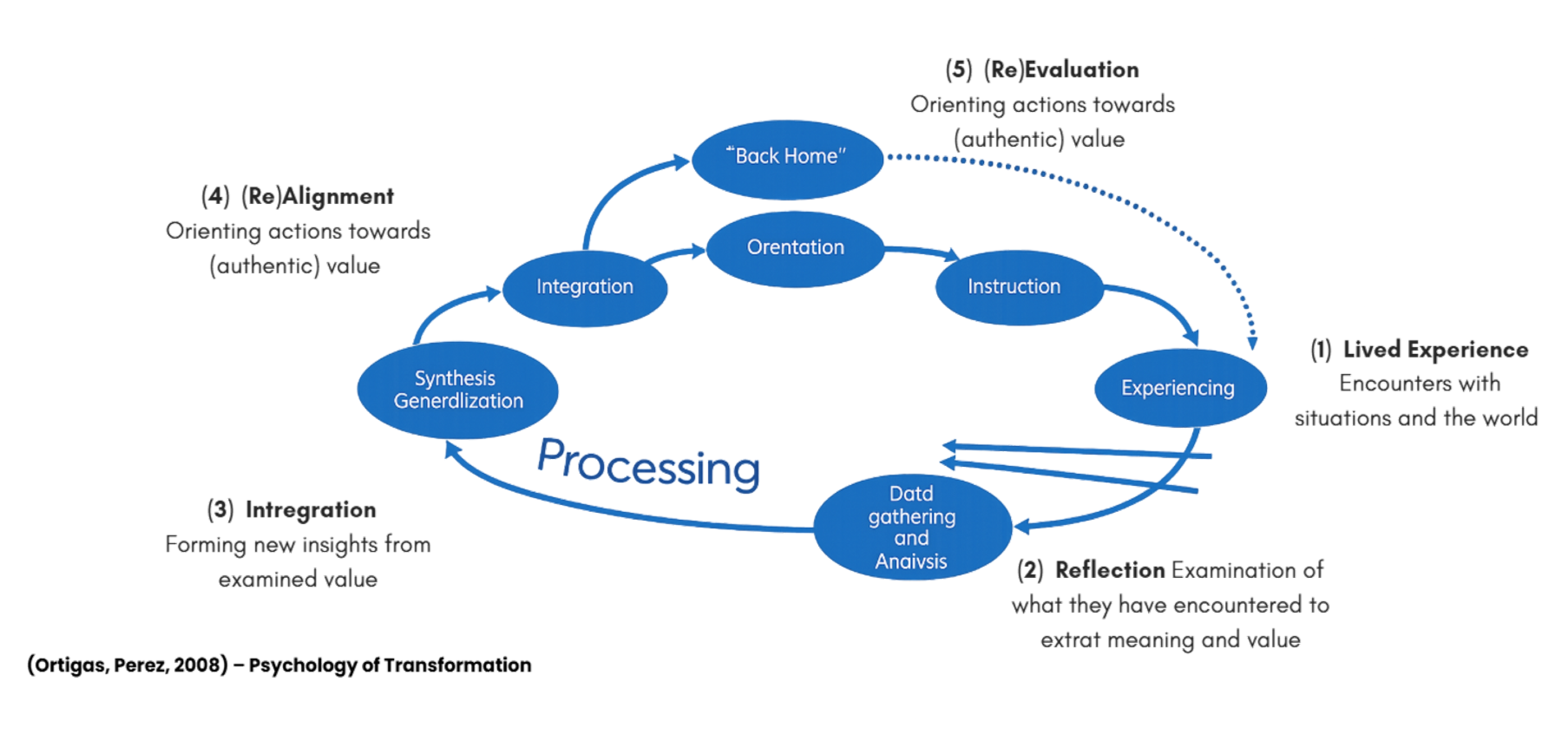
Figure 1.0 The Experiential Learning Cycle (Ortigas, Perez 2008)
The experiential learning cycle in figure 1.0 (Ortigas, Perez 2008) provides a structured framework for understanding these principles. Learning begins with concrete experience, followed by reflection, conceptualization, experimentation, and evaluation. Each stage deepens understanding and shapes behavior, ensuring that learning is continuous and purposeful. This cyclical process emphasizes that growth occurs when learners connect knowledge with authentic experiences, reflect meaningfully, and apply insights in practice. Facilitators play a crucial role in creating conditions of safety, respect, and relevance, enabling learners to move beyond information transfer into genuine transformation.
The Human Factor in Learning
At the core of inductive learning lies the human factor, the recognition that learning is not simply about transferring knowledge but about engaging the whole person in a process of growth. Lived experiences, emotions, and values shape how individuals interpret the world, and it is through reflection on these experiences that authentic meaning emerges.
By anchoring learning in the human dimension, inductive processes ensure that knowledge is not abstract or detached but connected to identity, purpose, and relationships. This human-centered approach “sparks” learners to cultivate resilience, authenticity, and ethical responsibility, reminding us that the future workforce will thrive not only on technical expertise but on the ability to remain deeply grounded in values and humanity.
Origins in Ignatian Contemplation
"Ite, inflammate omnia" - “Go fourth and set the world on fire”
– St. Ignatius of Loyola
Many modern approaches to adult learning align with Ignatian traditions. These traditions focus on engaging the whole person, thinking, emotions, values, and actions as part of learning and growth.
Ignatian pedagogy follows a simple cycle;context, experience, reflection, action, and evaluation. In this approach, educators act less like lecturers and more like guides, supporting learners to grow with authenticity and responsibility. Learning is not just about knowledge, but also about developing character, purpose, and social responsibility.
One key Ignatian practice is the Examen, a structured reflection exercise. It encourages people to pause, review their experiences, and draw meaning from them to guide future action. Research (Plante et al., 2025) shows that practising the Examen can improve hope, life meaning, and overall life satisfaction in university students.
In practice, this approach uses tools that help learners reflect on experience and connect it to learning. These include methods like concept mapping and the DEAL model (Describe, Examine, Articulate Learning). These tools help learners make sense of what they experience, link it to knowledge, and express what they have learned.
Overall, Ignatian-inspired learning highlights the importance of reflection, meaning-making, and values. It supports a more holistic and human-centred approach to adult education.
On Being a Facilitator of Learning
The inductive experiential learning approach centres on enabling learners to build meaning from their own experiences, rather than receiving knowledge as something externally imposed. In this context, facilitation differs fundamentally from traditional teaching, it is less about instruction and more about enabling, supporting, and guiding the learning process.
This requires facilitators to create conditions where learners can observe, reflect, generalize, and apply insights drawn from their lived experiences (Ortigas & Perez, 2009; Hechanova et al., 2014), aligning closely with the experiential learning cycle outlined in Figure 1.0. By emphasizing process over content delivery, facilitators support learners in identifying patterns, clarifying values, and connecting personal experience to broader concepts, leading to more authentic and transformative learning outcomes.
To do this effectively, facilitators need to develop a set of core capabilities that enable group-centered leadership and foster inclusive, participatory environments. These include active listening, reflective responding, clarifying, linking ideas, conveying acceptance, and demonstrating genuine human presence (Elliott et al., 2023; Monacelli, 2023; Ortigas & Perez, 2009). Collectively, these skills create the conditions for learners to feel respected, engaged, and empowered to contribute meaningfully.
For example, clarifying and linking help participants make connections across ideas and experiences, while conveying acceptance strengthens psychological safety. These capabilities are especially critical in adult learning contexts, where individuals engage most deeply in environments that are respectful and non-threatening.
Ultimately, the inductive facilitator balances structure with openness, providing enough guidance to support learning while allowing space for participants to co-create knowledge. In doing so, both individual insight and collective learning capacity are strengthened.
Evidence Base and Practical Implications
Research supports experiential and adult learning approaches. In biomedical training, Knapke et al. (2024) found that applying andragogical principles led to high learner satisfaction, particularly where learning was active, practical, and problem-based.
Similarly, Ekoto and Gaikwad (2015) showed that outcomes were not linked to demographics, but to how well learning aligned with core adult learning principles self-direction, relevance, and the use of prior experience. This reinforces that learning is most effective when it is autonomous, practical, and connected to real-life contexts.
In contemplative learning, Plante et al. (2025) found that daily Examen practice improved hope, meaning, and life satisfaction, while Marek and Walulik (2022) highlighted the importance of accompaniment in supporting holistic growth. Together, these findings emphasise the value of reflection and experience in building well-being and adaptability.
In practice, this means facilitators are well placed to design learning that is reflective, experience-based, and values-led, enabling learners to navigate complexity and connect learning to meaningful personal and professional growth.
The Seven Embers Modules: From Insight to Practice
Building on the principles of inductive learning, through Untapped7 and the UntappedME platform the Seven Embers approach represents the applied extension of this framework within practice. While this paper has explored the theoretical and evidence-based foundations of experiential and inductive learning, the Seven Embers Modules series translates these principles into structured learning journeys designed for real-world application.
The Seven Embers are each designed to activate a distinct dimension of human capability through lived experience, reflection, and meaning-making. Rather than positioning learning as a transfer of knowledge, these modules engage participants in a process of discovery - where insight is generated from within and shaped through interaction and practical application.
Each “ember” represents a catalyst for growth, anchoring key aspects of human development such as self-awareness, adaptability, purpose, and relational capability. Together, they form an integrated learning pathway that enables individuals and teams to move beyond surface-level skill acquisition toward deeper transformation.
Importantly, Seven Embers maintains alignment with the core principles outlined in this paper, learning begins with experience and is deepened through reflection, meaning is constructed, not delivered, growth is both individual and collective and the human dimension remains central to capability development
As organizations continue to navigate complexity and change, approaches like Seven Embers offer a practical way to embed human-centred, experience-driven learning into everyday practice - ensuring that learning is not only retained, but lived.
Conclusion
The emerging workforce requires a learning framework that is both adaptable and values-driven. Inductive learning provides this foundation by ensuring that knowledge remains grounded in authentic experience. It enables individuals to transform mistakes into insights, align learning with purpose and adapt continuously in complex environments
At its core, this framework emphasizes authenticity and values-based learning. Learning becomes not just skill acquisition, but a process of identity formation and meaning-making.
The Seven Embers approach highlights that future-ready individuals must possess not only technical capability but also the capacity to navigate complexity with authenticity, creativity, and integrity. In a world shaped by AI and rapid change, the human factor is not optional, it is essential.

The reference listing and simplifying of some language included in this article were constructed with the assistance of AI. AI organized APA formatting based on the meta tagging of the bulleted journal articles and references.
This Article contains cited materials from existing evidence-based sources. All referenced content is cited using APA format to ensure academic rigor and transparency. A comprehensive list of references is provided at the base of the article, as well as in text citations is the article sections
References
Argyris, C. (1976). Increasing leadership effectiveness. Wiley.
Ekoto, C. E., & Gaikwad, P. (2015). The impact of andragogy on learning satisfaction of graduate students. American Journal of Educational Research, 3(11), 1378–1386.
Elliott, R., Bohart, A., Larson, D., Muntigl, P., & Smoliak, O. (2023). Empathic reflections by themselves are not effective: Meta-analysis and qualitative synthesis. Psychotherapy Research, 33(7), 957–973.
Hechanova, M. R., Calleja, M. T., & Villaluz, V. C. (2014). Understanding the Filipino worker and organization. Ateneo de Manila University Press.
Knapke, J. M., Hildreth, L., Molano, J. R., Schuckman, S. M., Blackard, J. T., Johnstone, M., Kopras, E. J., Lamkin, M. K., Lee, R. C., Kues, J. R., & Mendell, A. (2024). Andragogy in practice: Applying a theoretical framework to team science training in biomedical research. British Journal of Biomedical Science, 81, Article 12651.
Loyola University Chicago, Center for Engaged Learning, Teaching, and Scholarship. (2024). Guide to critical Ignatian reflection.
MacKeracher, D. (2007). Making sense of adult learning. University of Toronto Press.
Marek, Z., & Walulik, A. (2022). Ignatian spirituality as inspiration for a pedagogical theory of accompaniment. Journal of Religion and Health, 61(10), 4481–4498.
Monacelli, C. (2023). Therapist-client interactions: A sociolinguistic perspective. International Journal of Novel Research in Healthcare and Nursing, 10(2), 192–197.
Ortigas, C. D., & Perez, J. P. (2008). Psychology of transformation: The Philippine perspective: Philosophy, theory, and practice. Ateneo de Manila University Press.
Peterson, J. B. (1999). Maps of meaning: The architecture of belief. University of Toronto Press.
Plante, T. G., Feldman, D. B., Ge, J., & Cortese, A. (2025). A randomized controlled trial assessing the psychological benefits of a daily Examen-based practice. Journal of Religion and Health, 64(5), 1239–1256.
Resende, L. M., Pontes, J., & de Barros, R. (2025). Exploring creativity and innovation in organizational contexts: A systematic review and bibliometric analysis of key models and emerging opportunities. Journal of Innovation & Knowledge, 10(3), Article 100061.
Stanislaw, H., & McCreary, J. (2023). Identifying core values with a hierarchical, ipsative, preference assessment. Journal of Personality Assessment, 105(3), 329–341.
Starkey, K., Tempest, S., & McKinlay, A. (2014). How organizations learn: Managing the search for knowledge. Routledge.
Taylor, B., & Kroth, M. (2009). Andragogy’s transition into the future: Meta-analysis of andragogy and its search for a measurable instrument. Journal of Adult Education, 38(1), 1–11.