

Neurointelligence - A Perspective
Carolyn Burr, M.Lead, Grad Dip Couns, B.A.
Adj Professor Michael Fieldhouse (MBA, BAppSc)
Jose Francis Llenado (RPsy, MA.Org Psy, BS Psy)
Elvis Coy (current B.Sci.)
Untapped Insight Piece
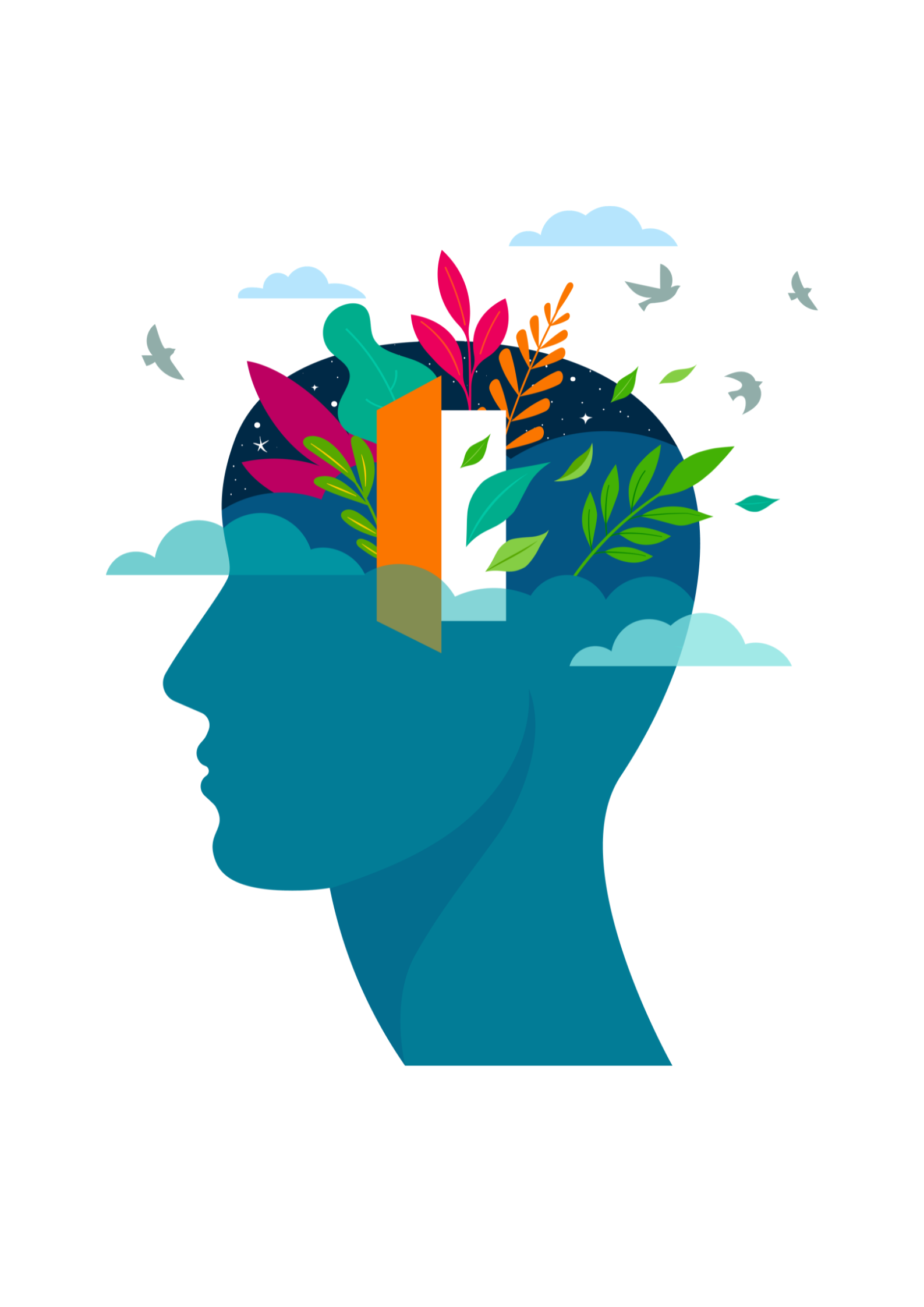
When people talk about the concept of neurointelligence, they’re usually referring to a simple but powerful idea; our ability to think, learn, solve problems and make decisions comes primarily from how the brain works as a whole system.
Modern neuroscience suggests that intelligence may be not located in a single smart part of the brain. Instead, it emerges from the way different brain regions and networks communicate, coordinate, and adapt to changing demands. Hence, intelligence can be understood as arising from distributed brain networks that dynamically coordinate to support functions such as memory, attention, problem‑solving, and decision‑making (Jung & Haier, 2007; Colom et al., 2010).
The indicators are that intelligence depends on patterns across the whole brain - how grey matter, white matter, and the connections between different regions all work together. A central theory, the Parieto-Frontal Integration Theory (P-FIT), suggests that we’re better at reasoning and focusing when our frontal and parietal lobes, plus other areas, coordinate really well together. Hence, intelligence comes from a brain-wide network, not just one spot. (Jung & Haier, 2007; Colom et al., 2010). Building on this, other work in network neuroscience looks at how large‑scale brain networks dynamically reconfigure as we think and learn. This research highlights qualities like connectivity, integration, and flexibility as key ingredients of intelligent behaviour (Barbey, 2018).
Interestingly, early neuroimaging research also contributed to the shift in understanding of neural efficiency. Research using PET scans, showed that individuals who performed well on reasoning tasks sometimes used less brain energy, rather than more. This backs up the neural efficiency hypothesis, which suggests that smarter brains might just work smarter, not harder. Importantly, this pattern is not observed across all tasks indicating that neural efficiency can be context dependent, rather than a universal rule (Haier et al., 1988; Haier, 2009).
Scientists have also looked at what makes people different in terms of intelligence. Genetics play a role in shaping how our brains are structured and connected, which affects how we think. However, there isn’t a single intelligence gene or one brain marker for being smart - it’s a complicated mix of factors all working together (Colom et al., 2010).
Recent interdisciplinary research has also brought together neuroscience and artificial intelligence (AI). AI systems are often inspired by how our brains work, and scientists are now using AI to help make sense of complicated brain data and even model how we think. It’s a two-way path, brain science helps design smarter AI, and AI helps us understand the brain better (Song et al., 2021).
At the same time, interest in brain‑based explanations of intelligence has grown well beyond academic research. Books, podcasts, and media often describe intelligence as distributed, contextual, and shaped by our environments, tools and relationships.While these ideas are often inspired by neuroscience, they also mix scientific findings with broader cultural interpretations. For example, works such as Livewired by Eagleman and widely followed podcasts draw on research into brain networks and plasticity, while also embedding these ideas within broader cultural narratives about learning, performance, and self‑development. While inspired by neuroscience, these accounts are able to blend scientific evidence with innovative, interpretive and new frontier perspectives.
Divergence in Abstraction and the Creative Process
Other research into neuroscience helps express another layer to this picture. A meta-analysis by Wu et al. (2015) pulled together findings from 17 neuroimaging studies to examine what’s happening in the brain during divergent thinking. Rather than pointing to a single creative brain area, the results indicated that creativity draws on a distributed network. Tasks like generating alternative uses or creating novel stories consistently activated regions across the prefrontal, parietal, and temporal lobes, as well as areas linked to the brain’s dopamine system. These regions support processes such as making remote associations, holding and manipulating ideas, and drawing on long-term memory. These findings suggest that creativity relies on the coordinated work of multiple brain systems, blending executive control, semantic processing, and memory, rather than any one isolated function.
Personality may also play a role. From an organisational perspective, Furnham et al. (2009) examined how personality traits and cognitive ability relate to divergent thinking in a large sample of managers. Traits such as openness and extraversion were shown to predict divergent thinking performance, alongside modest contributions from intelligence (Furnham et al., 2009).
When these perspectives are brought together, divergent thinking can be seen as a complex, multi-layered phenomenon. Taken together, this body of research suggests that creativity is best understood through an integrative lens that considers brain networks, personality, and context, rather than as a fixed trait or isolated ability.
In applied organisational contexts, the concept of neurointelligence has been adopted as a practical framework. For example, Untapped that powers Untapped7 and Untappedme, adopts these dynamic perspectives as a guiding framework. Untapped initiatives are designed to support individuals and organisations by offering experiential learning experiences and reflective tools that are informed by contemporary thinking on brain networks, cognitive flexibility, and learning. The aim is to support greater self-understanding, adaptability, and insight at work
In summary, research shows intelligence isn’t just a label - it’s connected to how our brains are wired and how efficiently different parts work together. Neuroscience tells us that smarts can come from lots of brain regions teaming up, while developments in AI show that complex, connected systems can act intelligently too. Overall, understanding intelligence means looking at the big picture - how it grows, adapts, and helps us handle different situations. This represents a promising direction for Untapped as we continue to grow flexible ways of approaching learning and adaptation.
Want to learn more about our platforms Untapped7 and Untappedme, including the launch of our exciting new Team Enablement Games? Visit us at Untapped Talent - Innovation, Productivity, & Wellness.
This Article contains cited materials from existing evidence-based sources. All referenced content is cited using APA format to ensure academic rigor and transparency. A comprehensive list of references is provided at the base of the article, as well as in text citations is the article sections

Some grammar in the article was revised with the assistance of AI and APA formatting based on the tagging of the bulleted journal articles and references. AI assistance was checked for validity through manual review.
References
Alabbasi, A. M. A., Acar, S., Runco, M. A., Martinez, C., Sultan, Z. N., & Ogurlu, U. (2024). A meta-analysis comparing the divergent thinking of gifted and nongifted students . Arabian Gulf University.
Barbey, A. K. (2018). Network neuroscience theory of human intelligence. Trends in Cognitive Sciences.
Bassett, D. S., & Sporns, O. (2017). Network neuroscience. Nature Neuroscience, 20(3), 353–364. https://doi.org/10.1038/nn.4502
Colom, R., Karama, S., Jung, R. E., & Haier, R. J. (2010). Human intelligence and brain networks. Dialogues in Clinical Neuroscience, 12(4), 489–501.
Eagleman, D. (2020). Livewired: The inside story of the ever‑changing brain. Pantheon Books
Furnham, A., Crump, J., Batey, M., & Chamorro-Premuzic, T. (2009). Personality and ability predictors of the "Consequences" test of divergent thinking in a large non-student sample. Personality and Individual Differences, 46(4), 536–540. https://doi.org/10.1016/j.paid.2008.12.007 (doi.org in Bing)
Haier, R. J., Siegel, B. V., Nuechterlein, K. H., Hazlett, E., Wu, J. C., Paek, J., Browning, H. L., & Buchsbaum, M. S. (1988). Cortical glucose metabolic rate correlates of abstract reasoning and attention studied with positron emission tomography. Intelligence, 12(2), 199–217.
Haier, R. J. (2009). The neuroscience of intelligence. Cambridge University Press.
Jung, R. E., & Haier, R. J. (2007). The Parieto-Frontal Integration Theory (P-FIT) of intelligence: Converging neuroimaging evidence. Behavioral and Brain Sciences, 30(2), 135–154.
Song, Y., Wu, S., Zhou, K., & Liu, J. (2021). Editorial: Cognitive NeuroIntelligence. Frontiers in Computational Neuroscience, 15, 718518.
Wu, X., Yang, W., Tong, D., Sun, J., Chen, Q., Wei, D., Zhang, Q., Zhang, M., & Qiu, J. (2015). A meta-analysis of neuroimaging studies on divergent thinking using activation likelihood estimation. Human brain mapping, 36(7), 2703–2718. https://doi.org/10.1002/hbm.22801