

Play your Way to Learning
Carolyn Burr, M.Lead, Grad Dip Couns, B.A.
Jose Francis Llenado (RPsy, MA.Org Psy, BS Psy)
Untapped Insight Piece
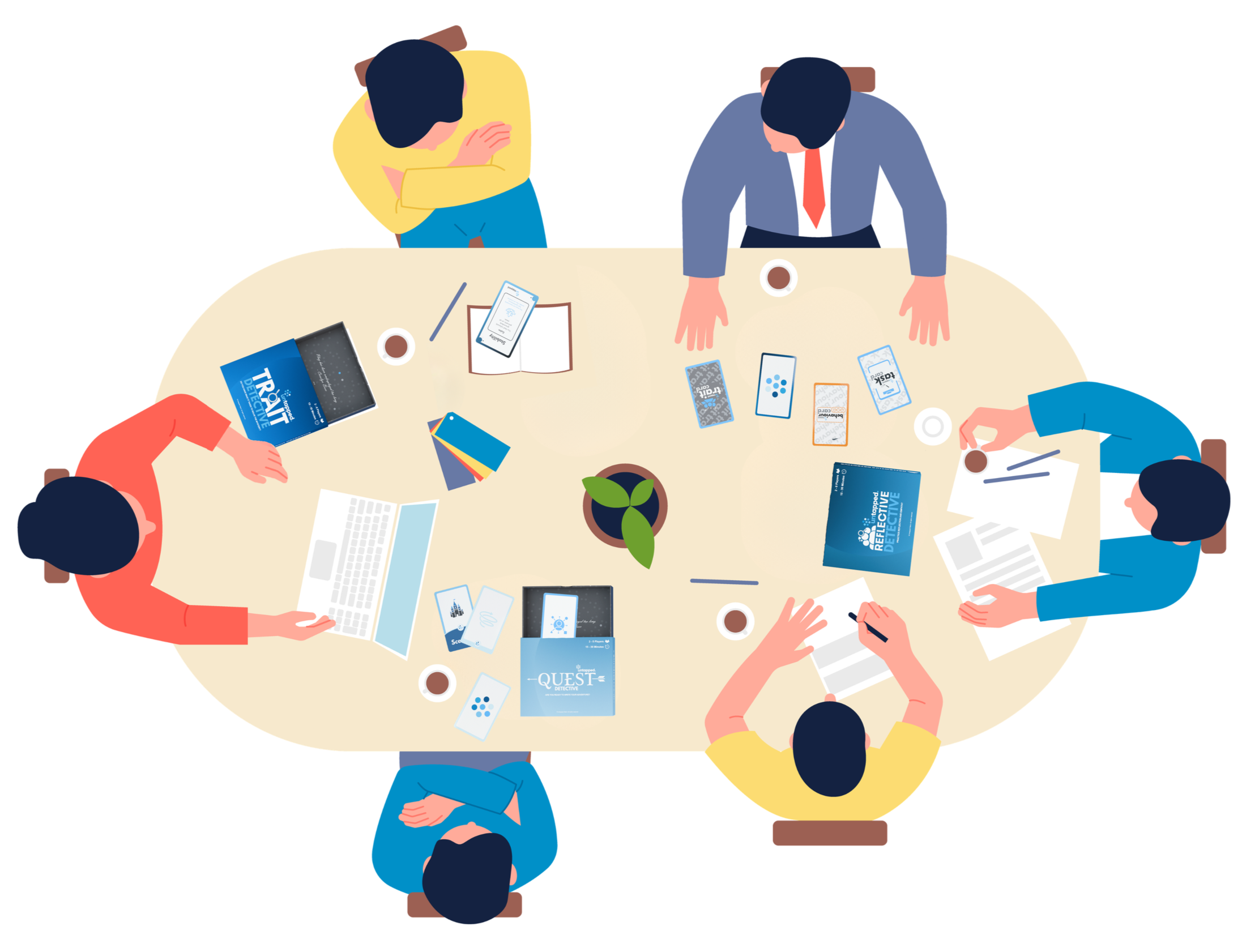
Play is now becoming more recognised as a strategic approach for learning, collaboration, and organisational innovation. A place where ideas are arranged and rearranged, and new perspectives are tried out. As Heljakka (2023) notes playful approaches involve experimentation with uncertainty - learning by doing and doing by playing. In these creative pursuits, play provides those moments of discovery and possibility of testing concepts without the risk of failure.
Why Experiential Learning Matters?
Neuroscience: Play Activates Learning and Creativity
Neuroscientific studies indicate that play activates the brain’s reward systems, increasing dopamine levels, which can enhance motivation, memory, and creativity. Jaak Panksepp’s (1998) foundational research on affective neuroscience reports that play strengthens neural pathways, supporting cognitive flexibility and problem-solving. Additional studies by Pellis and Pellis (2009) express that social play contributes to the development of executive function and adaptability.
Organisational Psychology: Engagement and Psychological Safety
Playful work environments are associated with improved engagement, reduced burnout, and stronger interpersonal bonds. When teams laugh together and bring a sense of play to their day, it can turn into a team-building adventure. Studies in organisational psychology reports that play supports psychological safety, allowing teams to take risks, experiment, and learn without fear of judgement (Bakker, Schaufeli, Leiter, & Taris, 2008). Edmondson’s (1991) research on psychological safety also highlights that environments encouraging play and experimentation promote trust and collaborative learning.
Design Thinking: A Builder for Innovation
Design thinking frameworks use play to boost creative and collaborative problem-solving. Bernier, Gee, Gao, Cortés, & Kessner (2024) found that play fixing games (playing and fixing broken games), creates diverse thinking patterns depending on complexity, playability, and rules. The study showed that game flaws and constraints enhance educational value in playful design activities. Liedtka & Ogilvie (2011) and that play fostered team experimentation and idea generation.
Meta-analyses and interdisciplinary research highlights the benefits of play for team cohesion, adaptability, and performance. Leadership scholars note that play provides a safe space for experimentation, reflection, and the development of emotional intelligence (Kark, 2011; Brown & Vaughan, 2009). Organisational research shows that structured play enhances learning, creativity, and wellbeing (Scharp, Bakker, & Breevaart., 2022; Panksepp, 2012).
The Spirit of Play in Team Enablement Games
As outlined, cooperative challenges encourage diverse thinking in gamified learning. Hence, games provide a natural place to practice adaptability, problem solving and change. Untapped which creates customised, accessible and practical learning experiences, is one example of how experiential learning has been built to help unlock potential. Team enablement games such as Trait Detective™, Quest Detective™ and Reflective Detective™ offer a lively approach, whilst also providing a sustainable rehearsal ground for building capability and confidence.
Trait Detective™ is designed to strengthen team connections by inviting participants to explore and appreciate the diverse strengths within a group. Through a series of engaging, curiosity-driven activities, team members are encouraged to identify and share traits and talents. This game incorporates interactive prompts, discussion and playful scenarios that prompts individuals to reflect on the strengths of others. The game also facilitates role alignment and recognising where strengths can best contribute to team goals. A wonderful game for becoming more aware and appreciative of similarities and differences.
Quest Detective™ is a dynamic team-building game that emphasizes creativity and collective problem-solving through collaborative storytelling. This is a game where participants are guided through a series of quests or challenges that require imaginative thinking and teamwork. The game typically presents missions that teams navigate together, encouraging individuals to contribute openly to ideas, share perspectives, and work towards a common objective. As the stories unfold, players innovate and adapt, often encountering plot twists or obstacles that can require flexible thinking. Quest Detective™ is particularly effective at drawing out diverse viewpoints, as each team member brings their own unique approach to solving the challenge. By blending elements of improvisation and strategy, the game inspires curiosity, innovation and reinforces teamwork.
Reflective Detective™ focuses on fostering wellbeing and mindfulness. The game centers on self-care approaches. Participants take part in thoughtfully crafted exercises that encourage reflection on well-being practices, self-care and strategies for maintaining balance amidst work demands. Reflective Detective™ is not limited to individual reflection; it also builds social connection within teams and normalises conversations about personal wellness.
In essence, the Team Enablement Suite is designed as games about games, a set of structured proxies that mimic dynamic human interaction. These activities guide players toward an exploration of the metagame: the universal, collective mechanisms by which people organize and navigate the world, environments, and social systems in groups and teams. The metagame represents the layer beyond the immediate rules of play. It is the underlying logic of collaboration, adaptation and meaning making that governs how individuals and teams respond to challenges, negotiate roles and co-create solutions.
By engaging in playful simulations, participants rehearse the deeper strategies of human interaction, testing how values, traits, and narratives can influence collective behavior. The Team Enablement Suite may be somewhat of a sandbox for meta learning, where trial and error, metaphor, and role approximation reveal insights into resilience, creativity and shared purpose. In this way, the games are like mirrors, reflecting hidden team dynamics and offering a space to experiment.
Collaborative learning within team dynamics extends this process beyond the individual. Each person’s map of meaning is enriched through interactions with others, creating shared mapping. This process is not just a way to add, it transforms. As groups engage through problem-solving, and reflection, they generate patterns of understanding. This is the essence of collective intelligence: the capacity of a group to “think as one” by pooling diverse perspectives, experiences, and cognitive strategies (Tuckman, 1965; Ortigas, 1994; 2008). Shared mapping then fosters coherence, enabling teams to align around common goals. It also promotes psychological development, as participants observe the evolution of perspectives through collaborative learning and team insights. Group-based learning, thus becomes a powerful mechanism, because it creates meaning-making that is flexible, adaptive, and resilient. In this way, collective intelligence is not just about having consensus, it is about developing a richer, more nuanced understanding of the world through multiple perspectives into a shared cognitive framework (Peterson, 1999).
The Impact
In summary, play at work fosters meaning, innovation, and stronger teams by inviting teams to explore and appreciate the diverse strengths within a group. When intentionally embedded into development activities through well-designed games, play opens up curiosity, resilience and innovation. Games like Trait Detective™, Quest Detective™, and Reflective Detective™ serve as experiential learning providing a sandbox for teams to rehearse deeper strategies for connection, testing concepts, reflecting on hidden dynamics and experimenting new approaches. As defined, fields of research strongly support the integration of structured play into organizational development and workplace learning. Importantly, it is also a great way to learn while having fun.
Interested in learning more?
News — Untapped Talent covers topics such as the spirit of play, neurointelligence and barriers and enablers in the workplace.
References
Bakker, A. B., Schaufeli, W. B., Leiter, M. P., & Taris, T. W. (2008). Work engagement: An emerging concept in occupational health psychology. Work & Stress, 22(3), 187–200. REF1
Bernier, J., Gee, E. R., Gao, Y., Pérez Cortés, L. E., & Kessner, T. M. (2024). Patterns of design thinking in playfixing broken games: An exploratory study. Information and Learning Sciences, 125(11-12), 1107–1125.
Brown, S., & Vaughan, C. (2009). Play: How it shapes the brain, opens the imagination, and invigorates the soul. Avery.
Edmondson, A. (1999). Psychological safety and learning behavior in work teams. Administrative Science Quarterly, 44(2), 350–383. REF2
Heljakka, K. (2023). Building playful resilience in higher education: Learning by doing and doing by playing. Frontiers in Education, 8, 1071552.
Kark, R. (2011). Games, leadership development, and the role of play in learning. In S. J. Armstrong & C. V. Fukami (Eds.), The Sage Handbook of Management Learning, Education and Development (pp. 507–527). Sage Publications.
Klein, C., DiazGranados, D., Salas, E., Le, H., Burke, C. S., Lyons, R., & Goodwin, G. F. (2009). The effects of team training on team outcomes: A meta-analysis. Journal of Applied Psychology, 94(3), 541–558.
Liedtka, J., & Ogilvie, T. (2011). Designing for growth: A design thinking tool kit for managers. Columbia University Press.
Mukerjee, Jinia & Metiu, Anca. (2021). Play and psychological safety: An ethnography of innovative work. Journal of Product Innovation Management. 39. 10.1111/jpim.12598.
Panksepp, J. (1998). Affective neuroscience: The foundations of human and animal emotions. Oxford University Press.
Pellis, S. M., & Pellis, V. C. (2009). The playful brain: Venturing to the limits of neuroscience. Oneworld Publications.
Peterson, J. B. (1999). Maps of Meaning: The Architecture of Belief. Toronto: University of Toronto Press.
Scharp, K., Bakker, A., & Breevaart, K. (2022). Playful work design and employee engagement. Journal of Vocational Behaviour, 134.